 |
| Lazarus being resurrected by the son of God, only after God himself had just finished killing him. |
I don’t think I’m telling any tales
out of school when I say that in this modern epoch, the interest in literature,
and reading in general, is diminishing.
(I don’t think many people are making it out of school either.) The purpose of this article is not for me to
erupt in a cacophonous and uncoordinated emotional diatribe about my
exasperation in regards to intellectual atrophy. That wouldn’t be very productive.
This blog is about the human body; every aspect of it. What is more conspicuous in regards to human identity, thought, and action than the mind? Beastio Theorio is just as disappointed when you allow your sinews to wither as when you allow your mind. But where has the burgeoning desire to acquire knowledge gone? We’ve all heard stories of past generations, prohibited from learning due to race, gender, or status, gambling their lives in order to read a book. Why aren’t books such a commodity any longer? The opus of literature available is now commodious and easily accessible. Why is it squandered? Yes, we are now inundated with a plethora of options which can steal our interest. Maybe we have different knowledge now. Maybe our brains are turning into a formless gruel. There’s no sense in pessimistically hypothesizing about that.
 |
| If we don't read, what are they supposed to eat? |
There’s only one thing I’m sure of
and can take palpable action against.
The literary canon has been established and is immutable according to
the ivorytower literati. The education
system has decided upon a most innocuous and insipid anthology which they
continually offer the children. Well,
they need to take notice that what they are offering is being rejected and the
generation is developing bibliophilia. Maybe
instead of Author A, it’s time to offer Author B. It is no longer time to play safe. Literature needs to stop acting like a
timorous eunuch and start twisting some testicles. So now here’s a list of necessary author
swaps.
Stop Reading: David Foster Wallace
When modernism went out of style,
along with it went literary depth, craft, emotion, and overall brilliance. The ushering in of post-modernism brought
along a cluttered, superficial, mechanical style which provided contrived
pastiche and nebulous bullshit.
Post-modernism is the cliché literature which puts a foul taste into the
common man’s mouth; it is which sparks comments such as “What is this…I don’t
even…” or “This is pretentious” or “None of this makes sense or matters.” And I don’t castigate these comments. Modernism dealt with true, worldly problems;
it was an artistic attempt to find truth, identity, quell fears, make
advances. Post-modernism is what
separated the writer from society.
Post-modernism is what made writing recondite. Post-modernism is what is responsible for
literature stimulating the bitter buds of our minds rather than the sweet. Fuck post-modernism.
Why David Wallace? He is the embodiment of what I’ve listed
above. He is the post-modern don. His novel/opus of mental diarrhea, Infinite Jest, is the leading doctrine
of these self-appraising ninnies. Infinite Jest is 1,000+ pages of
literary masturbation, surfeit with deadlanguage, inane allusions, flat
characters, and social issues dealt with so softly, you feel like you’re
betwixt a pillow fight.
Let this failed experiment with
literature die. Ignore it as you would
ignore a boisterous brat pining for attention.
Let it die and let true art rise.
 |
| I can only assume that he is on trial for the murder of literature |
Start Reading: Thomas Wolfe
You know, I could have very easily
written James Joyce. Where Wallace’s
prolix Infinite Jest is 1,000 pages
about nothing, Joyce’s works, Ulysses
and Finnegans Wake, are 1,000 pages
which encompass everything. Alas, my
favoritism of Joyce is well-documented, so I’ll give another epic writer a
chance.
You want thick, turgid books filled
with sprawling, wild, poetic sentences which run through the pages like waking
vines? As a young, aspiring writer,
Thomas Wolfe’s editor instructed him to write a novel. Three months later, Wolfe plopped a 3,000
page manuscript on his editor’s desk.
 |
| The only English word he didn't know was "editing." |
Yes, Wolfe was a wild man. His prose was unrelenting and unraveled with
an impetuous rhapsody. He only wrote
four novels, but those four novels can demand a lifetime to fully digest. Wolfe wrote with brutal veracity in hopes of
creating the truest fiction possible.
Upon release of his first novel, Look
Homeward, Angel, Wolfe became a virtual exile from his hometown of
Asheville, North Carolina, and ironically could not look homeward again. The citizens were outraged that they were so
accurately in a work of literature.
Truth hurts, I suppose.
Stop Reading: Fifty Shades of Grey
Gustave Flaubert predicted the denigration
of literature into a grey, romanticized mush with his 1856 novel, Madame Bovary. In Flaubert’s work, Madame Bovary becomes so
deeply immersed in the delusions of romance novels that she becomes disjointed
from reality and faces her demise.
Listen, I don’t want to spend too
much talking about a work which is utterly impertinent to the medium of
literature. The reason this doesn’t
qualify as literature is the same reason pornographic films don’t win
Oscars. Do I have anything against pornography? Of course not; it’s just that when a piece
becomes entirely fixated in exploiting one primal aspect of man and neglects
the artistic technicalities, it deserves to be compartmentalized as a niche
work.
 |
| The movie version is just a sex tape. |
Start Reading: D.H Lawrence
Nearly one hundred years ago, D.H
Lawrence was busy beginning “the sexual revolution.” His controversial novels were frequently
challenged by the courts for their vulgar language, ribald, and lascivious
subject matter. Where today’s grocery
literature is ravishing the right to speak freely, Lawrence treated it as a privilege.
Perhaps
his most controversial work is Lady
Chatterley’s Lover. If the reader
wants the visceral content of sex, love, and affairs, it is all present. The only difference is that the language and imagery
is created by a master poet, augmenting upon the sensory aspect of the
novel. And Lawrence doesn’t stop at
matters of flesh; he seeks to vivisect the symbiotic relationship between mind
and body. I suppose he was a reader of Beastio Theorio.
 |
| The smartest man to offer free mustache rides |
Stop Reading: Charles Bukowski
Okay, okay, I already hear the
snarls and sniping of angered men and women in flip-flops, stained shirts,
mussed hair, reading this blog with a hangover from cheap five dollar
wine. You see that sentence I just
wrote? That alone should make you a
scholar on most of Charles Bukowski’s work.
 |
| Fuck your stupid French talk show |
Listen, I can look over to my
bookshelf at this moment and count 22 Bukowski books. I have been a teenager who enjoys
reading. I am not (nor can I) denying that
at one point, Charles Bukowski was a major author in my personal literary cannon. But with age comes a natural growth. Yes, there is some refreshing grit, abandon,
and humor to be found in Bukowski’s works.
But you begin to realize just why he so frequently mentions the works of
other writers. Charles Bukowski is no
more than a collage of traits which he purloined from other literary greats. The humor he took from Thurber, the
grotesqueness from Rimbaud, Baudelaire, Verlaine, the sexuality from D.H, the psychological
torment from Dostoevsky, the emotional outpouring from the Spanish poets, the
brevity from Papa Hemingway. But there
is a singular author which he cites as his personal favorite from which his
mimesis of style is most evident.
 |
| Bukowski discovers the internet; no longer sees the need for women. |
Start Reading: John Fante
Or Bante as Bukowski constantly
refers to him. John Fante was a tough,
young man writing gritty, unadulterated prose about life on the streets of Los
Angeles. And he was doing this before
Bukowski even arrived on the scene and adopted the same shtick.
 |
| I'm pretty sure Bukowski has that exact same outfit. And that exact same cat, too. |
Fante’s short story collection, The Big Hunger, deals so thoroughly with
the topics of youth, attraction, poverty, the city, and writing that virtually
all of Bukowski’s redundant work is made defunct.
However, by far his most famous work
is the novel Ask the Dust. Undoubtedly one of my favorite works, Ask the Dust performs the bildungsroman archetype
of poor, young writer in the city falls in love with a girl to perfection. Something Bukowski toiled with for years but
without Fante’s precision and execution.
 |
| Salma Hayek, because she starred in the film version of Ask the Dust. Yeah, that's why. |
Stop Reading: Jane Austen or any of the inexorable supply
of Bronte sisters
If you’ve been through academia,
then you’ve been exposed to these female writers. These women are virtually a perfunctory read
at this point and that’s the issue. Too
often are these women venerated for the fact that they were women in a period in
which patriarchy was far more bumptious.
And boy, do these women let the reader know of the oppressive status
quo. These gender themes are far too inundating
and overwhelming; they compromise the work and prevent analysis from an
objective standpoint. At this present day,
the works of these women stand as historic landmarks rather than works of high
literary quality.
 |
| There they all are, conversing about periods, I'm sure. Literary and menstrual. |
Start Reading: Carson McCullers
It would be incredibly misogynistic
of me to say that I enjoy Carson McCullers as a writer because she writes like
a male. So I won’t say that.
In all seriousness, I believe that it
is insolent that Carson McCullers does not receive a prominent role as a figurehead
in female literature. Carson McCullers
had something which the aforementioned female writers did not possess:
toughness. She moved to New York City
alone at the age of 17, suffered through indigence, several strokes, rheumatic
fevers, two failed marriages with the same man (“Saroyan Syndrome”), and was a
veritable invalid at the age of 30.
Enduring through these tragedies allowed her an exceptional ability to
write a true and powerful sentence.
Gender was irrelevant in the works of McCullers; what was most salient
was the manner in which she passionately depicted the plights of abject and lonely
human beings.
The theme of sad and solitary human
beings wandering and bumping into each other is most common in her works. Her greatest work, The Heart is a Lonely Hunter, begins with one the most engaging first
chapters I have read; it depicts the relationship of two deaf and mute friends
who have been living together for ten years beginning to strain and collapse.
McCullers doesn’t ask for pity or
contrition; she has the skills to play with the big boys, no tricks or handicap
necessary.
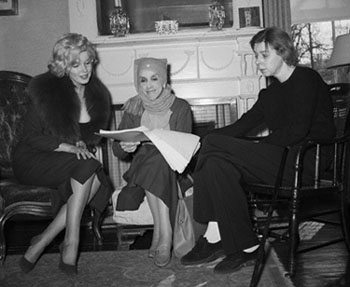 |
| McCullers and M. Monroe: One of these women banged Arthur Miller, and the answer may surprise you. |
The mood has stopped striking
me. Enough writing; I would rather be
reading. But as you can see, maybe the
problem is not in regards to the minds of the audience but rather the material
they are offered. I have no doubt that
the literary changes I have offered would not only appease, but greater satisfy
the reader.
Illliteracy
is becoming an issue. No, not
illiteracy, which is the inability to read or write. But rather Ill-literacy, which is when the
bullshit you read, makes me absolutely ill.
.jpg) |
| Salma Hayek because tits |
-Sameer
Saklani

Joan Didion is a great woman writer. I like Annie Proulx, but some people don't.
ReplyDeleteDidion is fine stuff. Mansfield is good at times. H.D. is good when she isn't proselytizing and philosophizing. I still hold firm to the belief that she dated D.H just for the humor of names.
DeleteGood read in spots, condescending in others. I wish you were nicer to the reader. You can open our eyes to better stuff without making us feel stupid for not already knowing about it, you know?
ReplyDeleteDean(&General Reader), is that not the ideal relationship? To have emotions of strife, turmoil, visceralness, all secondary to an ineluctable dependency. I wish the joy and enlightenment I bring to the reader to be tantamount to the acrimony I cause. I want to be before the people, exposed and unadulterated, elevated in idolatry, but still be separated by a dense yet translucent wall. Allow me to nurture and desecrate you. I will say I wish to be far from you, but know, that I love you.
DeleteI thought Pynchon or Delillo were the kings of postmodernism? I've read a decent bit of DFW and I've mined a lot of meaning from his work. I never feel alienated from the text like I do when I read the aforementioned Pynchon and Delillo.
ReplyDeleteYou have a valid point with Pynchon. However, he seems like old news these days. At least as far as the younger adults/graduate students go; their ingratiation and exaltation of Wallace is disturbing. Pynchon seems pretty innocuous to me; the guy just wants to remain unseen, undisturbed, and every once in a while, put out some material. Whatever, I'll leave him be.
DeleteAs far as you extricating meaning from DFW, to each his own, I suppose. Hell, we've seen a man believe Catcher in the Rye instructed him to kill John Lennon.
I guess I'm just slightly hesitant to accept your assertion that DFW is classically postmodern. He toyed with form, certainly, but I have never found him thumbing his nose at the reader or delighting in some sort of literary meta-joke. It seems to me that the theme that runs through most of his work is a want to return to sincere literature that tackles questions without irony (see his essays "E Unibus Pluram" and "Joseph Frank's Dostoyevsky").
DeleteMost of the people I know who really enjoy Mr. Wallace (myself included, I suppose) tend to eschew most postmodern fiction (at least recent postmodern fiction. I think it was certainly interesting and relevant in the 1950s and 60s, but much of the more recent avant garde is not nearly so palatable to me). This is just my experience, however. I wouldn't presume to speak for the individuals you've met.
Anyway, thanks for the response! I do like the blog, and I'll certainly check out this Wolfe character.
I reckon you're a good man.
DeleteYeah, I understand much of the narrative and ulterior motive of Infinite Jest is a desire to return to clarity. I think it's better achieved by directness rather than unrelenting irony. In other words, it's difficult to paint an avant garde painting which effectively conveys a desire to return to classicism.
But anyway, glad you like it; rest assured I'll keep pumping out more.